No products in the cart.

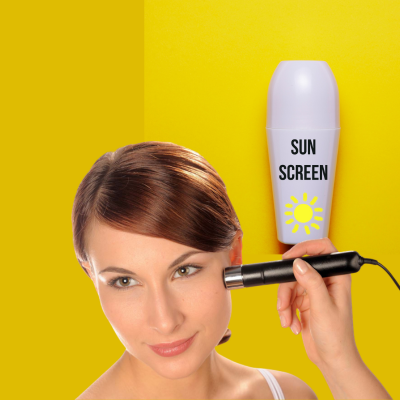

Objective melanin and erythema measurement
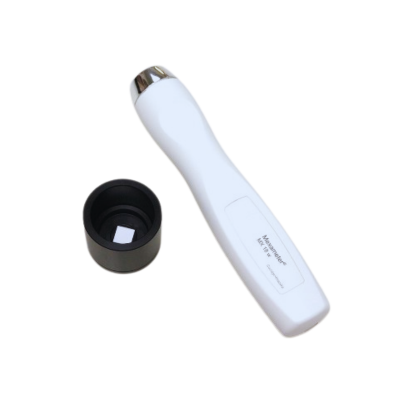
Quantifies skin pigmentation and redness using two separate values: Melanin Index and Erythema Index.
Fast and easy measurement
Provides results in approximately 1 second, making it practical for clinical studies, product testing, and routine evaluations.
High sensitivity on a broad scale
Measures melanin and erythema on a broad 0–999 scale, allowing even small changes in skin colour to be traced.
Optional continuous measurement
Supports continuous measurements over a longer period for monitoring dynamic skin responses.
Compact, lightweight, and reproducible
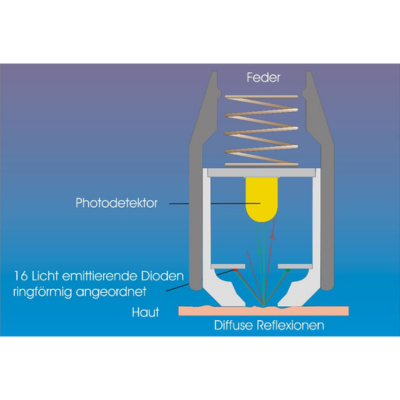
The small probe is easy to handle on different body sites, while the spring mechanism in the probe head ensures constant pressure for reliable measurements.
Easy accuracy check and cleaning
The probe accuracy can be checked easily at any time, and the probe head can be cleaned after each measurement.
Ideal for pigmentation and redness studies
Suitable for evaluating hyperpigmentation, tanning, brightening, erythema, irritation, inflammation, and redness reduction.
Globally established scientific method
The Mexameter® is widely used in scientific studies and can be integrated into the Courage + Khazaka MPA system for multi-parameter skin analysis.
Pigmentation and hyperpigmentation studies
Quantitative evaluation of melanin level, dark spots, uneven skin tone, tanning response, and pigmentation changes.
Dermatology and clinical research
Measure changes in stratum corneum hydration in studies involving dry skin, sensitive skin, barrier function, and treatment follow-up.
Erythema and redness assessment
Measurement of skin redness related to irritation, inflammation, sensitive skin, post-treatment response, or product reaction.
Claim substantiation and clinical studies
Supports objective before-and-after data for claims such as “reduces redness,” “improves skin tone uniformity,” “brightening effect,” and “helps reduce visible pigmentation.”

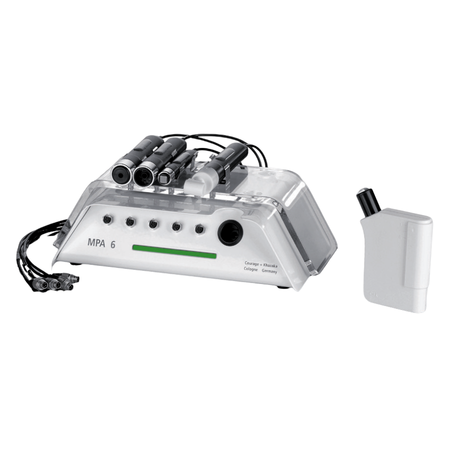
MPA
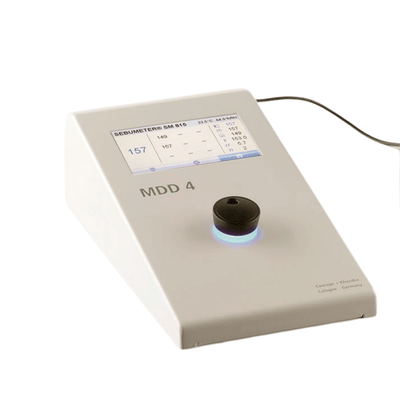
MDD 4
Wireless